
Buying a home is one of the biggest financial decisions you'll ever make, and it's normal to feel a little overwhelmed before you even start. The good news? Once you understand the process, each step becomes a lot more manageable.
Whether you're buying your first home or your fourth, this guide walks you through exactly what to expect, from setting a budget to picking up your keys on closing day.
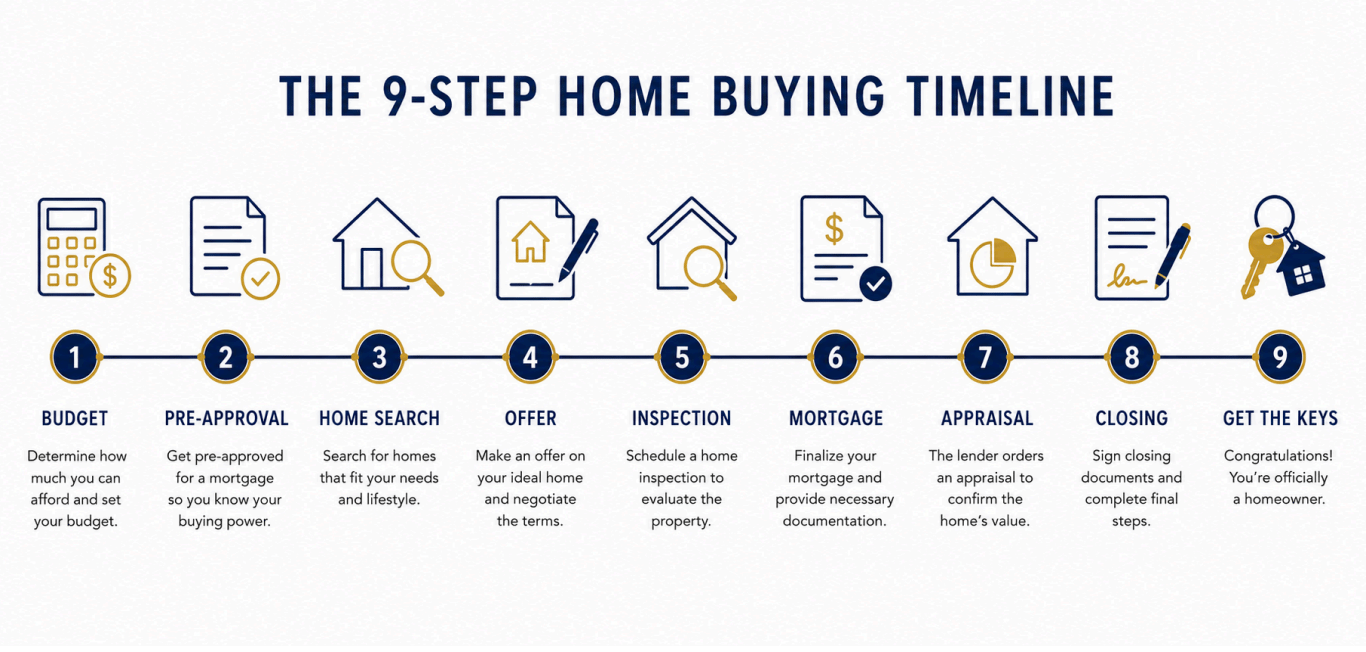
Step 1: Determine Your Budget

Before you fall in love with a listing photo, figure out what you can actually afford. Start by looking at your monthly income, existing debts, and how much you've saved for a down payment.
A common guideline is to keep your total housing costs - mortgage, taxes, and insurance at a comfortable share of your monthly income. But your comfort level matters more than any formula. Some buyers prefer a smaller payment that leaves room for savings and travel; others are fine stretching a bit for the right location.
Don't forget to budget for costs beyond the down payment, including closing costs, moving expenses, and a cushion for repairs once you move in.
Step 2: Get Pre-Approved for a Mortgage

Mortgage pre-approval is one of the most important early steps in the home buying process. A lender reviews your income, credit, and debts, then tells you how much you're qualified to borrow.
Pre-approval does two things: it confirms your real budget, and it shows sellers you're a serious, qualified buyer. In competitive markets, an offer without pre-approval is far less likely to be taken seriously.
Shop around with a few lenders. Interest rates and fees can vary, and even a small difference in rate can save you thousands over the life of your loan.
Step 3: Define Your Home Search Criteria

Now for the fun part. Make a list of your must-haves versus nice-to-haves - bedrooms, commute time, school district, yard space, or proximity to family.
Being specific here saves time later. It's much easier to tour ten well-matched homes than fifty that don't fit your life.
This is also a great moment to loop in a local real estate agent who knows the neighborhoods you're considering and can flag homes that fit your criteria before they hit your radar.
Step 4: Tour Homes
With your criteria set, it's time to start viewing homes in person (or virtually, if you're relocating from out of state).
Bring a checklist to each showing, take photos, and jot down notes. Homes tend to blur together after the third or fourth visit. Pay attention to things photos don't show well, like street noise, natural light, and storage space.
It's normal to tour several homes, or even go through a few rounds of searching, before you find the right one.
Step 5: Make an Offer

Found the one? Your agent will help you put together a competitive offer based on comparable sales in the area, the home's condition, and how long it's been on the market.
Your offer typically includes the purchase price, contingencies (like financing and inspection), and your proposed closing date. In competitive markets, a strong offer often comes down to more than just price - flexibility on timing or a personal letter to the seller can help.
Once the seller accepts, you're officially under contract.
Step 6: Schedule a Home Inspection

A home inspection gives you a professional, unbiased look at the property's condition before you finalize the purchase. An inspector checks the roof, foundation, plumbing, electrical systems, and more.
If issues come up, you're not stuck. Depending on your contract, you may be able to negotiate repairs, ask for a price reduction, or, in some cases, walk away.
Skipping this step to save time or make your offer more appealing can be a costly mistake down the road.
In some markets, sellers may already have an inspection report from before the home was listed, and they might share it with you. This information can be useful, but scheduling your own independent inspection is still important. It's your chance to get an unbiased professional opinion. In particularly competitive markets, your agent might even recommend having a pre-inspection done before you submit your offer. This can give you confidence in your bid and sometimes help you stand out to sellers.
Step 7: Finalize Your Mortgage
With the inspection complete, it's time to move your pre-approval into a fully underwritten loan. Your lender will request documentation - pay stubs, bank statements, tax returns to verify everything on your application.
Try to avoid big financial changes during this period, like opening new credit cards or making large purchases. Lenders often re-check your credit before closing, and surprises here can delay or derail your loan.
Step 8: Home Appraisal
Your lender will order a home appraisal to confirm the property is worth what you've agreed to pay. This protects both you and the bank from overpaying.
If the appraisal comes in at or above the purchase price, you're clear to move forward. If it comes in lower, you'll typically need to renegotiate the price, cover the difference in cash, or, if your contract allows, walk away.
Step 9: Prepare for Closing
As closing day approaches, you'll receive a Closing Disclosure outlining your final loan terms and closing costs. Compare it closely against your original Loan Estimate to make sure nothing has changed unexpectedly.
You'll also want to schedule a final walk-through of the home 24 - 48 hours before closing to confirm it's in the agreed-upon condition and that any negotiated repairs were completed.
Step 10: Closing Day

This is it. On closing day, you'll sign a stack of documents, pay your remaining closing costs and down payment, and officially take ownership of the home.
Once everything is signed and funds are transferred, you'll get the keys. Congratulations - you're a homeowner.
Common Home Buying Mistakes to Avoid
● Skipping pre-approval: Shopping without knowing your real budget often leads to disappointment.
● Underestimating closing costs: These add up on top of your down payment, so it's worth planning ahead.
● Waiving the inspection to win a bid: This can save time upfront but cost far more later.
● Making big purchases before closing: New debt can affect your final loan approval.
● Not budgeting for the unexpected: Set aside savings for repairs and moving costs after you close.
Practical Tips for a Smoother Home Buying Journey
● Get organized early - gather pay stubs, tax returns, and bank statements before you apply for pre-approval.
● Work with a local agent who knows your target neighborhoods well.
● Keep your finances stable from pre-approval through closing.
● Ask questions at every step - a good lender or agent should welcome them.
● Give yourself a buffer in your timeline; home buying rarely moves exactly on schedule.
Frequently Asked Questions
How long does the home buying process take?
Most buyers can expect the process to take 30–60 days from an accepted offer to closing, though it can vary based on financing and local market conditions.
How much money do I need to buy a house?
Beyond your down payment, plan for closing costs, moving expenses, and a reserve for immediate repairs or updates.
Do I need a real estate agent to buy a home?
While it's possible to buy without one, an experienced agent can help you find suitable homes, negotiate effectively, and navigate contracts and deadlines with confidence.
What's the difference between pre-qualification and pre-approval?
Pre-qualification is a rough estimate based on self-reported information. Pre-approval involves a lender verifying your finances and is a stronger signal to sellers.
Can I back out after making an offer?
Yes, if your contract includes contingencies like financing or inspection. Backing out without a valid contingency, however, may put your earnest money deposit at risk. What happens if the home appraisal comes in low? You can renegotiate the price with the seller, pay the difference in cash, or, if your contract allows, walk away from the deal.
Final Thoughts
The home buying process can feel like a lot at first, but breaking it into these ten steps makes it far more manageable. Every buyer's timeline looks a little different, and that's completely normal.
If you're just getting started and want guidance specific to your market, our team at Reali is here to help. Reach out anytime to talk through your options - no pressure, just honest advice from people who do this every day.
Call to Action:
Thinking about buying a home in Seattle, Dallas, Bay Area, Southern California, or Boston? Reach out to the Reali team - we're happy to answer questions and help you figure out your next step, whenever you're ready