Most buyers start browsing homes before they've actually figured out what fits comfortably into their life. It's an easy trap to fall into. You see a listing with the kitchen you've always wanted, the extra bedroom, the yard big enough for the dog, and suddenly you're picturing yourself there before you've thought about what that home would really cost you every month.
That's the tricky part about home affordability. It's not just about whether a lender will approve you. It's about whether the home still feels like a good decision six months in, two years in, ten years in.
So how much home can you really afford? The honest answer is that it depends less on a formula and more on the life you want to live once you have the keys. Let's walk through how to figure that out.

Just Because You Can Borrow More Doesn't Mean You Should
Here's something worth sitting with: lender approval and financial comfort are two completely different things.
A lender looks at your income, your existing debts, and your credit, then tells you the maximum they're willing to loan you. That number is based on what you can technically pay back. It says nothing about whether you'll still be able to take a vacation next year, keep contributing to your emergency savings, or cover childcare without stress.
Think about it this way. Two buyers can get approved for the exact same loan amount and still be in completely different financial situations. One of them has no other financial goals and plenty of breathing room. The other is also trying to save for a wedding, pay down a car loan, and build up their savings for a future they're excited about. The "right" home price for those two people probably isn't the same number, even though a lender would approve them both for it.
Before you get attached to a price range, ask yourself what else matters to you. Do you want to travel? Are you planning to grow your family? Do you want the flexibility to change careers or take a lower-paying job you'd actually enjoy? Your home budget should leave room for the life you're trying to build, not compete with it.

Look Beyond the Monthly Mortgage Payment
When most buyers picture their home buying budget, they picture the mortgage payment. That's just one piece of the puzzle.
Owning a home comes with a whole list of costs that don't show up on the listing page. Property taxes vary depending on where you buy, and they can meaningfully change what "affordable" looks like from one neighborhood to the next. Homeowners insurance is another recurring cost, and if you're buying in an area prone to flooding, wildfires, or other risks, that premium can be higher than you'd expect.
If the home has an HOA, factor that in too. Some HOA dues cover a lot, like landscaping and amenities. Others barely cover the basics and still show up every single month.
Then there's maintenance. Something is always going to need attention. A roof will eventually need replacing. Appliances wear out. HVAC systems don't last forever. And that's before you even get to the everyday stuff: higher utility bills than you had in a rental, lawn care, pest control, and the general cost of keeping a bigger space clean and running.
Don't forget moving costs either. Between movers, deposits, new furniture, and all the little things you didn't realize you needed until you unpacked your first box, moving into a new home rarely comes cheap.
None of this is meant to scare you off homeownership. It's meant to help you see the full picture. The purchase price is just the headline. The real cost of owning a home lives in all the details underneath it.
Think About the Life You Want After You Buy
It's worth pausing here and asking a bigger question: what do you actually want your life to look like after closing day?
Do you want to keep doing the hobbies you love, even the expensive ones? Are you still contributing to retirement savings the way you'd like to be? If you're planning to have kids, or already have them, have you thought about how their needs might change your budget in a few years? Do you want the freedom to travel, or to take a career risk without your mortgage payment holding you back?
A home shouldn't come at the cost of everything else you care about. If buying a certain house means giving up on savings, canceling vacations, or feeling anxious every time something unexpected comes up, that's a sign the price tag is bigger than your actual comfort zone.
The buyers who feel good about their home purchase years later are usually the ones who bought a home that supported their life, not one that consumed it.
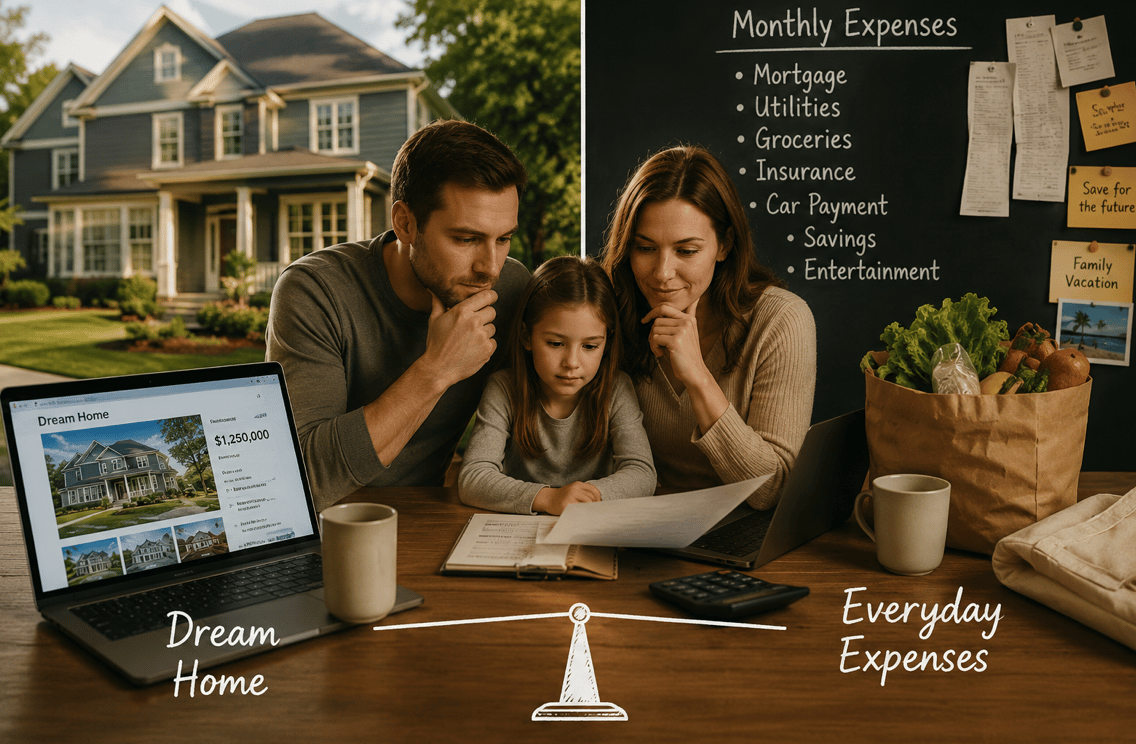
Build a Comfortable Home Buying Budget
So how do you actually land on a number? Start with what you know for certain: your monthly income and your recurring expenses. Look at what you're currently spending on essentials, debt payments, and the things you're not willing to give up.
From there, think about your savings goals. Do you want to keep building your emergency fund after you close? Most financial advisors would tell you that's a smart move, especially in the first year of homeownership when surprises tend to pop up. Are you saving for something else, like a car, a wedding, or your kids' future? Your home budget should leave room for those goals too, not swallow them whole.\
This is also the moment to think honestly about your future financial goals. Where do you want to be in five years? Ten? A home that fits your life today but blocks every other goal you have isn't really affordable, even if the math technically works.
The buyers who feel the most confident aren't usually the ones who stretched to the top of their loan approval. They're the ones who chose comfort over maximum borrowing power, and gave themselves room to breathe.
Why Mortgage Pre-Approval Still Matters
Even though pre-approval isn't the same thing as knowing your true comfortable budget, it's still an essential step, and it's worth doing early.
Pre-approval means a lender has actually reviewed your income, credit, and debts, and given you a written estimate of what they're willing to lend. That's different from a rough online calculator or a guess. It's based on real documentation.
Getting pre-approved helps you in a few practical ways. It narrows your home search so you're not wasting weekends touring homes that were never realistically in play. It strengthens any offer you make, since sellers take pre-approved buyers more seriously in competitive markets. And it saves you time down the road, because a lot of the paperwork is already done by the time you're ready to move on to a home you love.
Just remember: your pre-approval amount is a ceiling, not a target. Treat it as information, not as instructions.

Common Mistakes Buyers Make
Understanding where other buyers go wrong can help you avoid the same headaches.
Shopping before understanding the budget. Touring homes before you've thought through what you can comfortably afford almost always leads to disappointment, or worse, overspending because you've already fallen in love with something out of range.
Ignoring ownership costs. Focusing only on the mortgage payment and forgetting about taxes, insurance, maintenance, and utilities is one of the most common budget mistakes buyers make.
Focusing only on the down payment. Saving diligently for a down payment feels productive, but if that's the only number you've planned around, closing costs and moving expenses can catch you off guard.
Buying based on emotion. It's natural to fall for a home. But letting emotion override your budget is how buyers end up house-rich and cash-poor.
Forgetting future expenses. Life changes. Kids grow, careers shift, families expand. A budget that only accounts for today can feel a lot tighter a few years down the road.
Stretching too far because it "feels close enough." A little bit of stretch might be fine for the right home. A lot of stretch, especially without a plan, can turn homeownership from exciting into stressful.
Signs You're Shopping Within Your Comfort Zone
How do you know when you've found the right price range? A few signs tend to show up.
You may have found the right price range if you can:
- Still save money every month, even after your mortgage payment
- Comfortably pay your regular bills without feeling squeezed
- Handle an unexpected repair without panic
- Keep enjoying the lifestyle you already have
- Feel excited about your future home, not stressed about affording it
If most of those feel true, you're probably in the right range. If none of them do, it might be worth reconsidering your price point before you go further.
Practical Checklist: Before You Decide What You Can Afford
Use this list to get clear on your budget before you start touring homes:
☐ I've reviewed my monthly income and recurring expenses honestly
☐ I've thought about what lifestyle costs matter most to me (travel, hobbies, savings)
☐ I've accounted for property taxes, insurance, and HOA dues in my area of interest
☐ I've planned for maintenance, repairs, and utility costs, not just the mortgage
☐ I've set aside funds for closing costs and moving expenses separately from my down payment
☐ I've thought about my future goals, not just my current situation
☐ I've gotten pre-approved so I know my real ceiling
☐ I've decided on a comfortable price range that isn't just my maximum approval amount
☐ I feel excited, not anxious, when I picture the monthly payment
Frequently Asked Questions
How do I know if a home is truly affordable?
A home is truly affordable if you can pay for it every month without giving up the parts of your life that matter to you. If you can still save, still enjoy your lifestyle, and still handle the unexpected without panic, you're in a good spot.
Should I spend my maximum loan approval amount?
Not necessarily. Your pre-approval reflects what a lender is willing to give you, not what feels comfortable for your life. Many buyers find they're happiest choosing a home well under their approved amount so they have flexibility for savings, travel, and everyday living.
What expenses do buyers often forget?
Closing costs, moving expenses, ongoing maintenance, and the first round of repairs are the ones that catch people off guard most often. It's smart to plan for these separately from your down payment.
Is pre-approval the same as knowing my budget?
Not quite. Pre-approval tells you what a lender will loan you. Your actual budget should factor in your lifestyle, your goals, and your comfort level, which is a more personal number than what shows up on a pre-approval letter.
How much emergency savings should I have after buying?
Enough to cover a surprise repair or a few months of expenses without scrambling. The exact amount depends on your situation, but having some cushion left over after closing gives you real peace of mind as a new homeowner.
Affordability isn't about buying the biggest house you can qualify for. It's about buying a home that supports the life you actually want to live, one where you can still travel, save, relax, and handle whatever comes up without constant financial stress.
Take your time with this decision. Think it through instead of rushing into it because a listing caught your eye. If you want to understand the process from start to finish, our guide to the complete home buying process is a helpful next read, and if you're just getting started, 10 things every first-time home buyer should know covers a lot of the ground worth thinking about early on.

Ready to Figure Out Your Real Number?
If you're planning to buy a home in Seattle, Dallas, the Bay Area, Southern California, or Boston, the Reali team is here to help you understand your budget, explore your options, and move forward with confidence. Reach out anytime. We're happy to answer your questions with honest guidance and no pressure.